If you're a freelancer, Grab driver, or running a small business in Malaysia, you already know the drill. You shove receipts into your wallet, promise yourself you'll sort them "this weekend," and then find a pile of faded thermal paper three months later when it's time to file taxes.
You're not alone. Malaysia now has over 3 million own-account workers and gig economy participants, according to Malay Mail — and most of them don't have a bookkeeper. The good news? You don't need one. What you need is a system that takes less than 20 minutes a week.
This guide walks you through exactly how to track business expenses on your own, what LHDN actually requires you to keep, and the common mistakes that cost Malaysians thousands in missed deductions every year.
Why Tracking Expenses Actually Matters (It's Not Just About Tax)
Let's be honest — most people only think about expense tracking when tax season arrives. But poor tracking costs more than you think:
- Lost deductions: On average, small business owners lose around USD $5,000 per year in unclaimed tax deductions due to missing documentation.
- Wasted time: Business owners who track manually spend 10 to 15 hours per month on bookkeeping — that's nearly two full workdays.
- Cash flow blindness: A U.S. Bank study found that 82% of small businesses fail due to poor cash flow management. You can't manage what you don't measure.
- Audit risk: LHDN can request proof of any claim up to 7 years after filing. No receipt? No deduction.
The "Shoebox Method" — and Why It Fails Every Time
We've all done it. Receipts in your bag, your car console, your wallet, that one drawer in the kitchen. Financial advisors call this the "shoebox method," and it's costing you more than you realise.
- Thermal receipts fade. That Grab Mart receipt? Standard thermal paper becomes unreadable in 6 months to 2 years under normal conditions — faster if stored in your wallet (body heat acts like a mini-oven at 36-37°C). Leave one on your dashboard and it's gone in days.
- Context disappears. Three months later, what was that RM240 charge? Client lunch? Office supplies? Without notes, you'll either skip it or guess — both are bad.
- Accounting fees spike. Bookkeepers charge extra to sort through a mess. A task that takes 30 minutes with organised records can balloon into a 3-hour project from a shoebox.
- Deductions get missed. Among companies relying on physical receipts, 1 in 5 had errors in over 20% of expense claims, compared to just 1 in 20 for those using digital systems.
What LHDN Actually Requires You to Keep
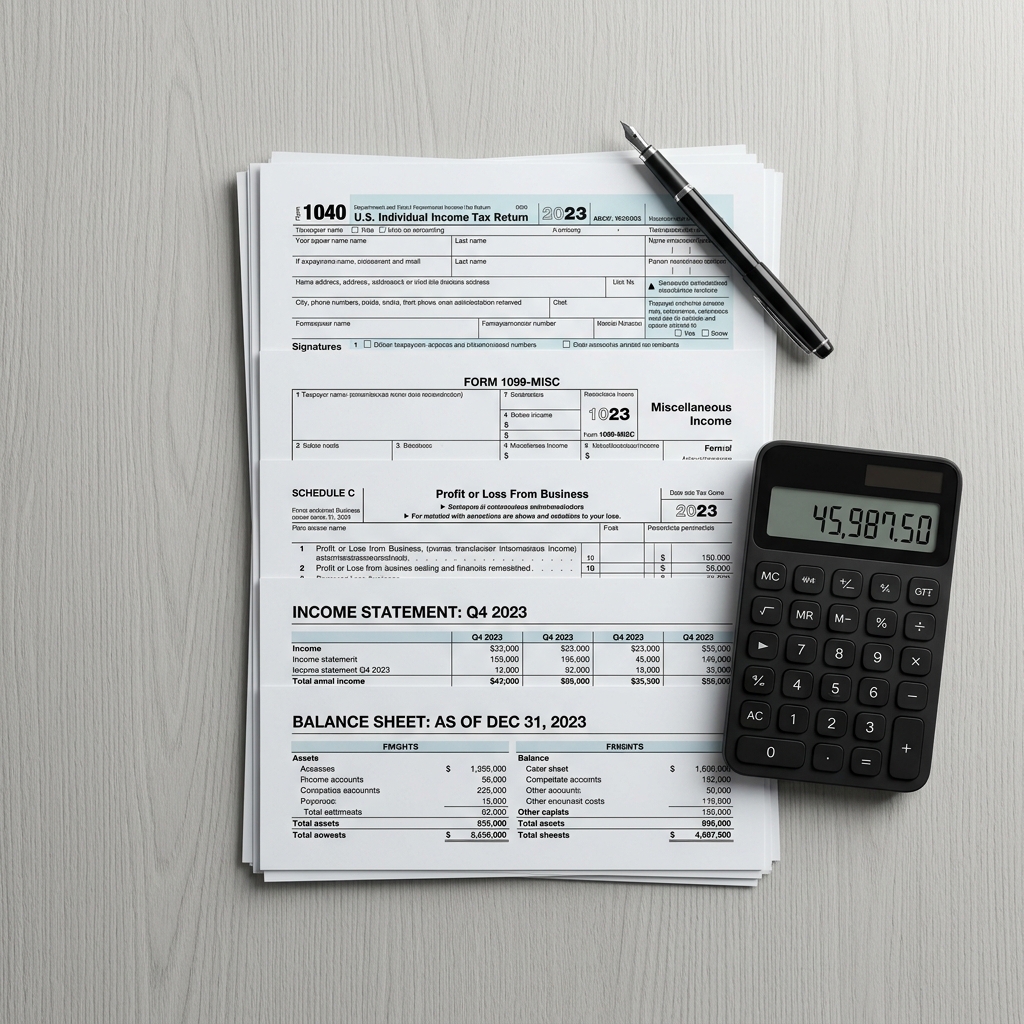
Before building your system, you need to know the rules. Under Section 82A of the Income Tax Act 1967, LHDN requires:
- Keep all records for 7 years from the end of the relevant assessment year.
- Records must be in English or Bahasa Malaysia.
- Records must be kept in Malaysia (unless you get special approval from the Director General).
- Transactions should be recorded within 60 days.
- Digital records are accepted — but they must be readily accessible in electronic form and convertible to print on demand.
The key takeaway: digital copies are perfectly valid. You don't need to keep a filing cabinet of crumbling paper. A photo of a receipt on your phone, properly organised, meets LHDN requirements.
Freelancer Filing 101: Form B, Not Form BE
If you have business income (freelancing, side gigs, sole proprietorship), you file Form B, not the Form BE that salaried employees use. This is important because Form B lets you deduct all wholly and exclusively incurred business expenses against your income.
What You Can Deduct as a Business Expense
| Category | Examples | Notes |
|---|---|---|
| Office & Workspace | Co-working space, home office utilities, rent | Home office: proportional to space used |
| Equipment | Laptop, phone, monitor, printer | Capital allowance for items > RM2,000 |
| Software | Adobe, Canva, accounting tools, cloud storage | Full deduction as operating expense |
| Internet & Phone | Broadband, mobile plan, data add-ons | Business portion only |
| Transport | Fuel, parking, tolls, Grab rides to clients | Log your trips with dates and purpose |
| Marketing | Website hosting, Facebook ads, business cards | Fully deductible |
| Professional Fees | Accountant, lawyer, consultant | Fully deductible |
| Insurance | Business liability, professional indemnity | Not personal insurance |
| Supplies | Stationery, packaging, raw materials | Fully deductible |
Filing deadline: Manual filing by 30 June; e-Filing by 15 July. You must file if your annual income exceeds RM37,333 (after EPF deduction).
5 Tax Deductions Most Malaysians Miss
These reliefs are separate from your business expenses — they're personal reliefs available to all individual taxpayers for YA 2025 (filing in 2026):
- Lifestyle Relief (RM2,500) — Covers your phone, laptop, books, internet subscription, and even gym membership. If you bought a new phone this year, claim it. Source: LHDN
- Health Examination (RM1,000) — This is separate from the RM10,000 medical relief. Annual check-ups, dental cleanings, and vaccinations all qualify. Most people don't know this exists.
- Voluntary EPF Contributions (RM3,000) — Beyond your mandatory EPF, you can top up voluntarily and get extra tax relief. It's essentially a guaranteed return.
- Education and Medical Insurance (RM4,000) — Increased from RM3,000 starting YA 2025. If you have medical insurance, check you're claiming the updated limit.
- SSPN Savings (RM8,000) — If you have children, deposits into the National Education Savings Scheme give you up to RM8,000 relief. One of the highest relief amounts available.
A Simple System That Takes 20 Minutes a Week
You don't need complex accounting software. Here's a minimal system that keeps you LHDN-compliant and maximises your deductions:
Step 1: Scan Every Receipt Immediately
The moment you get a receipt, scan it. Don't put it in your wallet "for later." A receipt scanning app on your phone takes 3 seconds and solves the thermal fading problem permanently. The best apps use AI to extract the merchant name, date, total, and even individual line items automatically.
Step 2: Set Up 8–10 Expense Categories
Keep it simple. Align your categories with how you'll report them:
- Office & Workspace
- Equipment & Software
- Transport & Travel
- Marketing & Advertising
- Professional Services
- Meals (Business)
- Supplies
- Insurance & Subscriptions
- Personal Reliefs (medical, education, lifestyle)
Step 3: Weekly Review (15–20 Minutes)
Pick one day a week — Sunday evening or Monday morning. Review your scanned receipts, categorise anything that's uncategorised, and add notes to business meals (who you met, what was discussed). This is also when you check your bank statement against your records.
Step 4: Monthly Export
At the end of each month, export your expenses to a spreadsheet or PDF. This gives you a clear picture of where your money went and makes tax filing dramatically easier. If you use an app like SnapBill, you can export to CSV, Excel, or PDF with one tap.
Step 5: Year-End Tax Prep (2 Hours Max)
If you've done Steps 1–4 consistently, year-end is just a summary exercise. Total up each category, cross-check against your relief limits, and you're ready to file. No shoebox panic. No scrambling for faded receipts.
Expense Tracking Tools: What Works for Malaysians?
Most popular tools are designed for US or UK markets. Here's how they actually stack up for Malaysian users:
| App | Price | Receipt Scanning | MYR Support | Malaysia-Specific |
|---|---|---|---|---|
| SnapBill | Free (credits system) | AI with line items | Native MYR | Yes — built for MY/SG receipts |
| Expensify | USD $5/mo | SmartScan AI | 150+ currencies | No local tax features |
| Dext | USD $24+/mo | 99.9% accuracy claim | Multi-currency | No — targets UK/US/AU |
| Smart Receipts | Free / USD $11/mo | AI OCR | Auto exchange rates | No local features |
| Wave | Free | Photo capture only | As foreign currency | Not supported for MY |
| Swipey | Contact for pricing | Receipt upload | Native MYR | Yes — MY bank integration |
The biggest gap in most international apps? They don't handle multilingual receipts. Malaysian receipts come in a mix of English, Malay, and Chinese — often on the same receipt. Apps trained primarily on English text struggle with this. If you're picking a tool, test it on a real kopitiam receipt before committing.
What About E-Invoicing? (MyInvois)
Malaysia is rolling out mandatory e-invoicing in phases through the MyInvois system:
- Aug 2024: Companies with turnover > RM100 million
- Jan 2025: Turnover > RM25 million
- Jul 2025: Turnover > RM5 million
- Jan 2026: Turnover > RM1 million
- Exempt: Businesses with turnover RM1 million or below
If you're a freelancer or small business below the threshold, e-invoicing doesn't affect you yet. But LHDN has stated that e-invoicing will eventually reduce the need for keeping physical receipts. Until then, the 7-year retention rule still applies — so keep scanning those receipts.
Mistakes That Will Cost You During an Audit
- Receipts without your name. LHDN prefers receipts with the claimant's name. Anonymous receipts are a common audit flag.
- Mixing personal and business expenses. Use a dedicated bank account or credit card for business spending. It's the single most impactful thing you can do.
- Claiming lifestyle relief for business equipment. Your work laptop should be claimed as a business expense under Form B, not under the RM2,500 lifestyle relief. Mixing them up is a red flag.
- Double-claiming between spouses. If you and your spouse file separately, make sure you're not both claiming the same child relief or medical insurance.
- Using last year's relief limits. Amounts change. The education and medical insurance relief increased from RM3,000 to RM4,000 for YA 2025. Check every year.
Start Tracking in Under 2 Minutes
The best time to start tracking was January. The second best time is now. Every receipt you scan today is a potential deduction you won't lose.
SnapBill scans receipts in seconds with AI — extracting every line item, tax, and discount. Works on English, Malay, and Chinese receipts. Free to start. Download SnapBill Free
Disclaimer: This article is for general informational purposes only and does not constitute tax, legal, or financial advice. Tax laws and relief limits are based on publicly available LHDN information for Year of Assessment 2025 and may change. Always consult a qualified tax professional or refer to the official LHDN website for the most current guidelines applicable to your situation. SnapBill is not a licensed tax advisor.