Keep them for seven years. Under section 82A of the Income Tax Act 1967, anyone who files a tax return must keep the documents behind it for seven years from the end of that year of assessment. That includes the receipt for every relief you claim. Here is which documents count, whether a photo is enough, and how to keep them without a drawer full of faded paper.
The rule: seven years from the end of the year of assessment
LHDN says every tax document must be kept safely for at least seven years, under sections 82 and 82A of the Act (LHDN tax education article). Section 82A covers everyone who files a return. Section 82 sets the same seven years for business records.
The clock starts at the end of the year of assessment (YA), not the day you file. For most people the YA is simply the calendar year the income was earned.
| Year of assessment | You file in | Keep the records until at least |
|---|---|---|
| YA 2023 | 2024 | 31 December 2030 |
| YA 2024 | 2025 | 31 December 2031 |
| YA 2025 | 2026 | 31 December 2032 |
| YA 2026 | 2027 | 31 December 2033 |
Seven years is longer than most people expect. Thermal paper receipts rarely last that long. Many fade within months, especially in a wallet or a hot car.
What happens if you don't keep them
LHDN accepts your return in good faith. But if something looks unusual, an officer can contact you and ask for proof of the reliefs or expenses you claimed. If you can show the receipts, the claim stands. If you cannot, that claim can be disallowed and the extra tax charged.
Not keeping records is also an offence under section 119A. The fine is RM300 to RM10,000, up to one year in prison, or both (LHDN offences and penalties).
Which documents to keep
Keep anything that supports a number on your return:
| Document | Why you keep it |
|---|---|
| EA form, payslips, dividend vouchers | Proves your income |
| Invoices and statements for side or business income | Proves income and business expenses |
| Relief receipts: books, phone or laptop, internet bills, sports equipment and gym fees, medical bills, childcare and education fees | Proves each relief you claim |
| Insurance, EPF and PRS statements | Proves insurance and retirement reliefs |
| Donation receipts from LHDN-approved organisations, zakat receipts | Proves donation deductions and zakat rebates |
| Birth and marriage certificates | Supports spouse and child reliefs |
| e-Invoices for purchases where you asked for one | Same proof as a receipt, in digital form |
Not sure which reliefs need a receipt this year? See tax relief receipts to collect before 31 December.
Is a photo or scan enough?
Yes. LHDN says tax documents can be kept as a printed copy or a digital copy. Section 82A asks that digital records stay easy to open and can be printed when LHDN asks. So a clear, complete photo or PDF of the receipt works. In practice a digital copy is safer than the paper, because it does not fade.
Purchases with an e-invoice also appear in LHDN's MyInvois Portal. But the portal's search only goes back 2 years, and many shops don't issue e-invoices at all. So you still need your own copies (see do you need an e-invoice to claim tax relief?).
A storage routine that takes minutes
- Scan on the day. Snap the receipt before it reaches your wallet.
- Keep the photo, not just the total. If LHDN questions a claim, the item list is what shows it qualified.
- Group by year of assessment. One folder or ledger per year makes the seven-year clean-up easy.
- Back it up. A broken phone should not take seven years of records with it.
Outside Malaysia the period is different. The US IRS generally says 3 years, the UK asks self-employed people to keep records 5 years after the 31 January deadline, and Australia's ATO asks for 5 years from when you lodge.
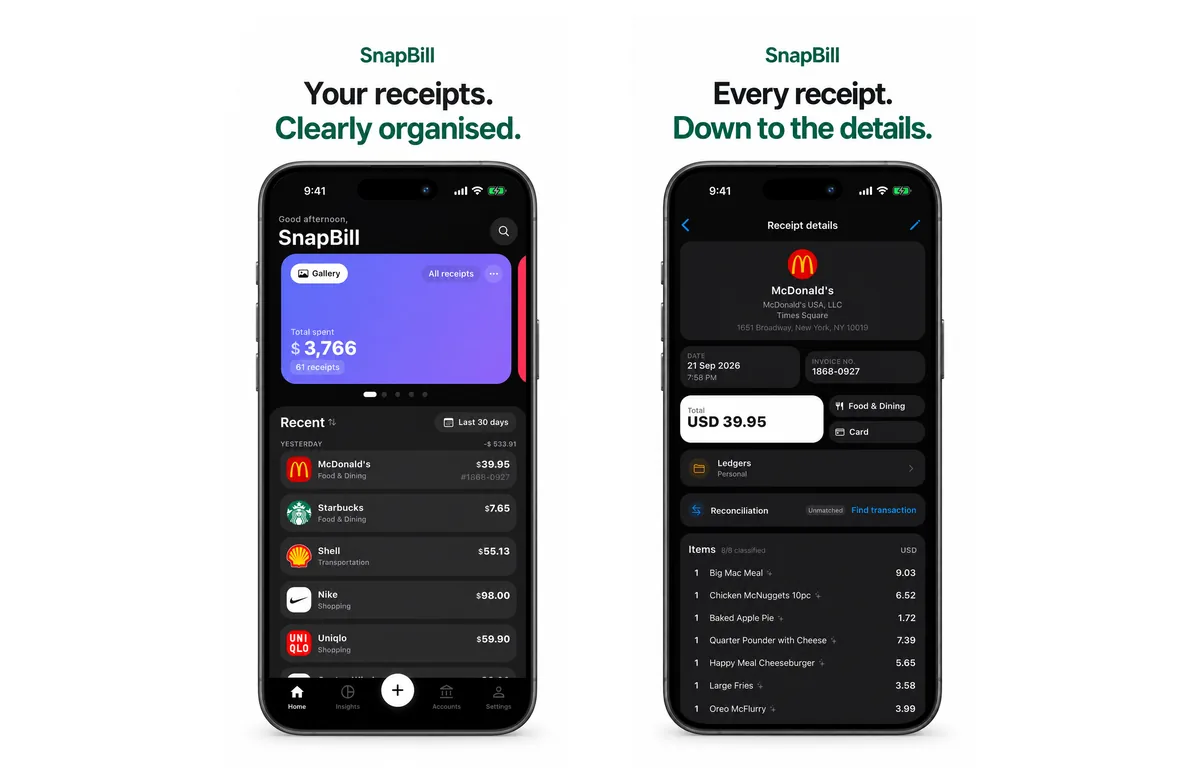
SnapBill does the first three steps for you and keeps the photos in your account, not just on your phone. It reads every line item and sorts spending into categories you can export as CSV, Excel or PDF for your records or your tax agent. Whether an item qualifies for relief is still yours to check. Start free on iPhone, Android or the web. Download SnapBill
More on keeping tax records in one place: keep your LHDN tax receipts organised.
Quick answers
How long should I keep receipts for LHDN?
Seven years from the end of the year of assessment, under section 82A of the Income Tax Act 1967. Receipts for YA 2026 should be kept until at least 31 December 2033.
Can I keep a photo instead of the paper receipt?
Yes. LHDN accepts a digital copy, as long as it is complete, easy to read and can be printed if asked.
When can I throw old receipts away?
After the seven years are up, unless you filed that year late or LHDN is still reviewing it. In 2026, the oldest year you still need is usually YA 2019, kept until 31 December 2026.
What if I lose a receipt?
Ask the shop for a copy or an e-invoice, or keep another document that proves the payment, such as a bank statement plus an order confirmation. The sooner you ask, the more likely the shop still has it.
Disclaimer: This article is general information, not tax advice. Check the latest rules on the LHDN website or ask a tax professional about your situation. SnapBill is not a licensed tax advisor.